
Acetyl Hexapeptide-3 (Argireline) 200mg (Topical)
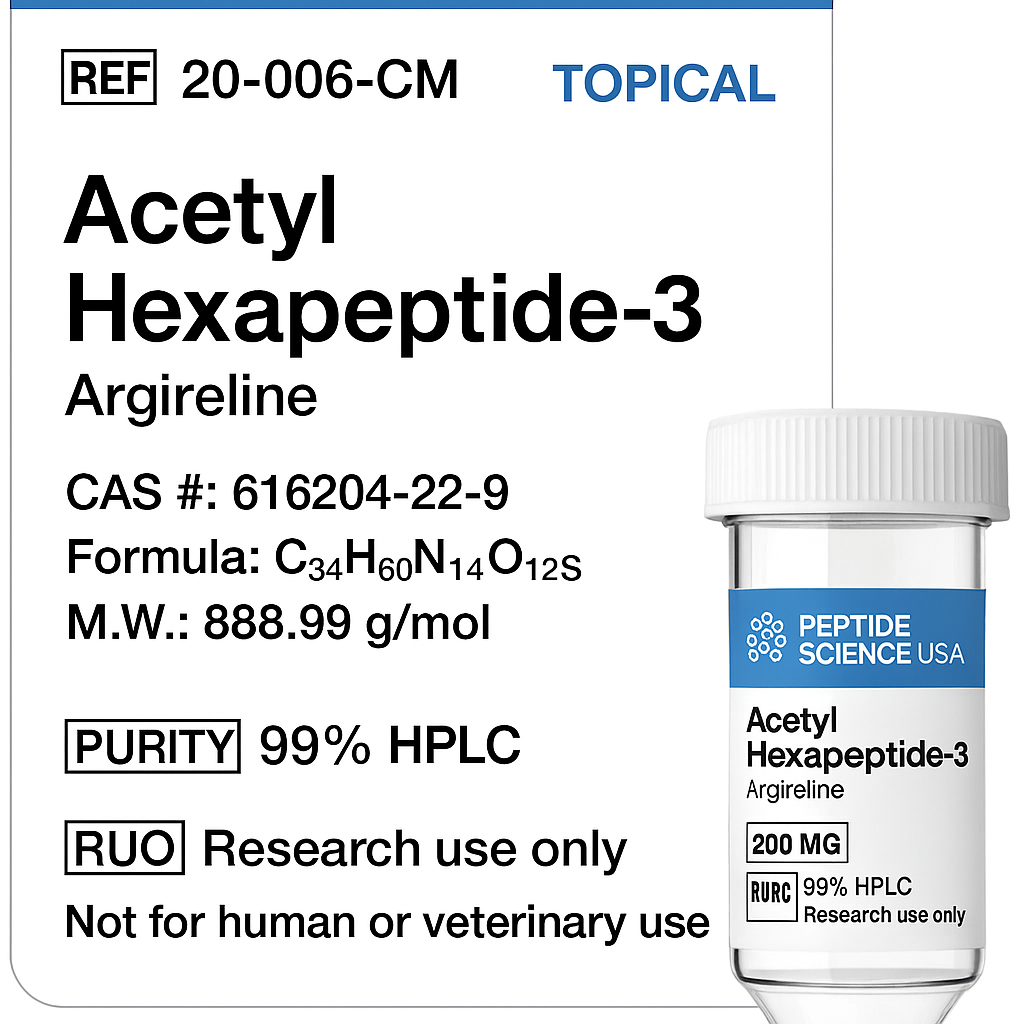
Acetyl Hexapeptide-3 (Argireline) 200mg (Topical)
$ 94.70
Discount per Quantity
Acetyl Hexapeptide-3 (Argireline) 200mg | Premium Topical Research Peptide Comprehensive Product Overview: Acetyl Hexapeptide-3 Acetyl Hexapeptide-3, widely recognized by its trade name Argireline, is a synthetic hexapeptide modeled after the N-terminal end of the SNAP-25 protein. This 200mg research-grade formulation is specifically designed for topical application studies, focusing on its ability to modulate neurotransmitter release in in vitro and ex vivo dermal models. As a key focus of modern cosmetic chemistry, Argireline is studied for its unique mechanism of action: the competitive inhibition of the SNARE (Soluble N-ethylmaleimide-sensitive factor Attachment Protein Receptor) complex. This 200mg vial provides researchers with a high-concentration substrate to investigate the temporary relaxation of muscle contraction signaling in skin equivalents. Technical Specifications and Biochemical Profile Molecular Engineering and Sequence Integrity The efficacy of Acetyl Hexapeptide-3 in a laboratory setting depends on the precision of its acetylation. Our 200mg vials are synthesized via solid-phase methods to ensure the N-terminal acetyl group is perfectly positioned for maximum receptor affinity. Amino Acid Sequence: Ac-Glu-Glu-Met-Gln-Arg-Arg-NH2 Molecular Formula: $C_{34}H_{60}N_{14}O_{12}S$ Molecular Weight: Approximately $888.99 \text{ g/mol}$ Purity: $\ge 98\%$ (Verified by HPLC and Mass Spectrometry) Concentration: 200mg Lyophilized Crystalline Powder Topical Formulation and Solubility To facilitate effective topical research, the 200mg Argireline vial is optimized for integration into various delivery vehicles. It demonstrates excellent stability when reconstituted in standardized laboratory solvents: Solubility: Highly soluble in water, glycerin, and propylene glycol. Reconstitution: For topical research, it is often incorporated into hydrogels or oil-in-water emulsions. Storage: The lyophilized powder is stable at room temperature for transit but should be stored at -20°C for long-term preservation. Once in solution, maintain at 2°C to 8°C to prevent microbial growth and peptide oxidation. Research Applications and Scientific Utility SNARE Complex Modulation and Neurotransmitter Studies The primary utility of Acetyl Hexapeptide-3 lies in its role as a “botulinum-mimetic” peptide. Unlike the toxin itself, Argireline is studied for its ability to non-toxically inhibit the release of catecholamines (specifically glutamate and acetylcholine). Researchers utilize the 200mg concentration to monitor: Vesicle Fusion Inhibition: Observing the destabilization of the SNARE complex in neuronal cell lines. Surface Topography Analysis: Measuring the reduction of “expression lines” in reconstructed 3D skin models. Dermal Permeability: Evaluating the peptide’s ability to traverse the stratum corneum when paired with different penetration enhancers. Advanced Comparative Efficacy With 200mg of Acetyl Hexapeptide-3, laboratories can conduct extensive dose-response trials. This allows for the determination of the optimal percentage (typically between 3% and 10% in topical models) required to achieve significant reduction in muscle signaling without disrupting cellular viability.
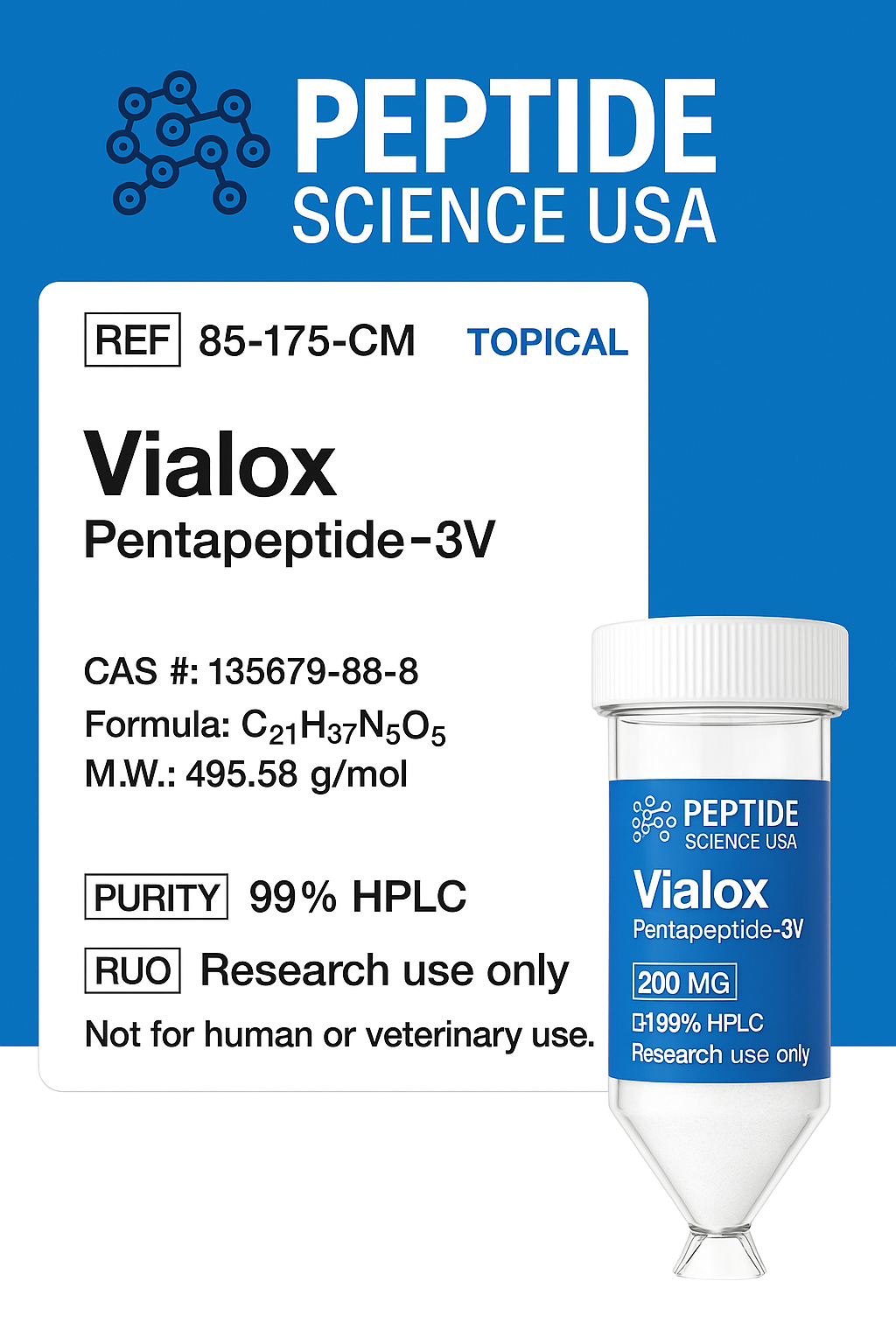 Order Vialox (Pentapeptide-3V) 200mg
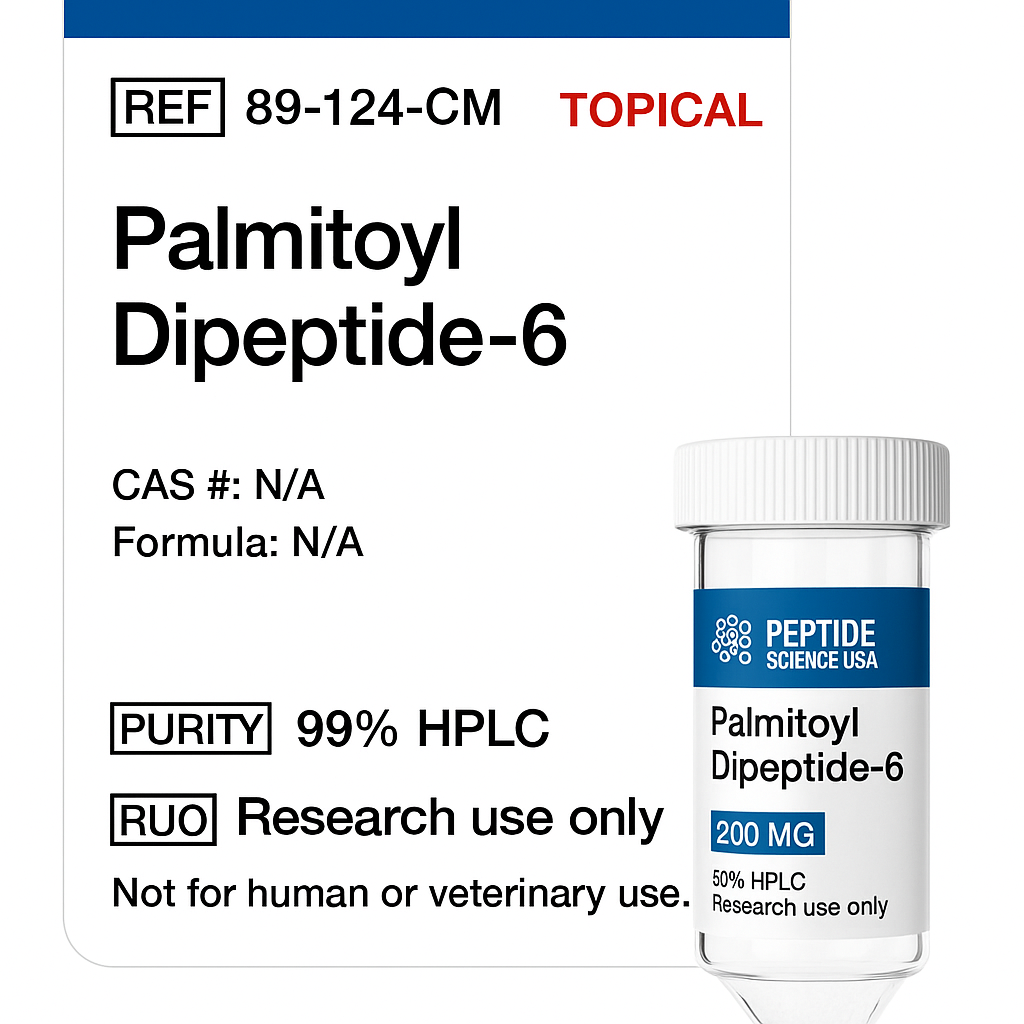 Buy Palmitoyl Dipeptide-6 200mg
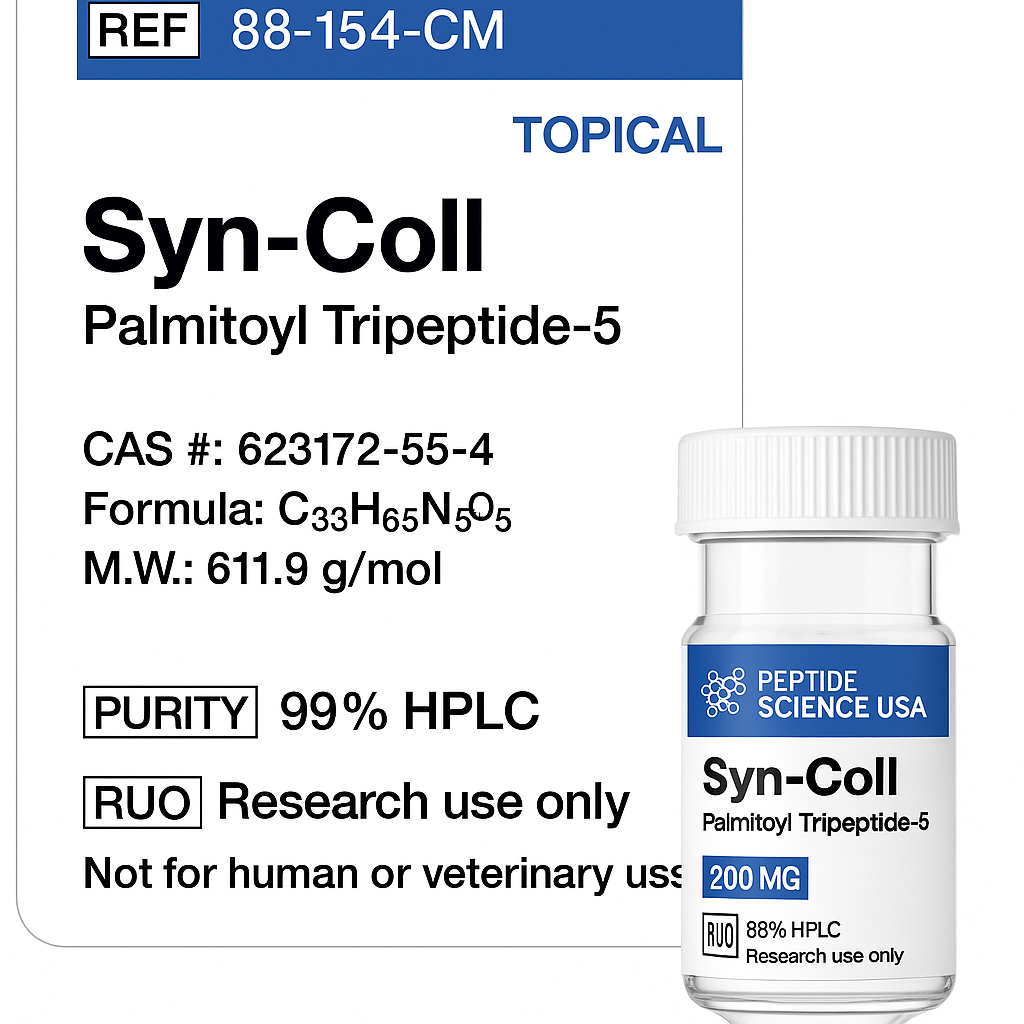 Buy Syn-Coll (Palmitoyl Tripeptide-5) 200mg